Yoga for PCOD
What is PCOD?
PCOD (Polycystic Ovarian Disease) is a condition in which a woman’s ovaries become enlarged and start producing many immatures or partially mature eggs.
These eggs turn into small cysts, causing hormonal imbalance.

Symptoms of PCOD
-
Irregular or missed periods
-
Weight gain (especially around the belly)
-
Acne and oily skin
-
Unwanted facial/body hair
-
Hair thinning / hair fall
-
Difficulty in getting pregnant
- Mood swings
Yoga for PCOD These poses help balance hormones, reduce belly fat, improve period regularity, and lower stress — the main causes of PCOD.
Safety Tips
✔ Move slowly, no jerks
✔ Stop if there is pain in neck or back
✔ Keep wrists under shoulders
(1.) Butterfly yoga for PCOD:

How to do:
Step 1: Sit Comfortably
-
Sit on the floor or a yoga mat.
-
Keep your spine straight.
Step 2: Join Your Feet
-
Bring both soles of your feet together.
-
Hold your feet or ankles with your hands.
Step 3: Bring Feet Close
-
Pull your heels gently towards your pelvis.
-
Keep your spine long and shoulders relaxed.
Step 4: Flap the Knees
-
Let your knees fall outward.
-
Start gently flapping your knees up and down like butterfly wings.
-
Keep the movement slow and controlled.
Step 5: Hold & Stretch
-
After 20–30 flaps, hold the pose.
-
Press your knees gently toward the floor (do not force).
-
Take deep breaths.
Step 6: Stay & Relax
-
Stay in this position for 1–2 minutes.
-
Breathe deeply and relax your pelvic muscles.
How Butterfly Pose Helps Reduce PCOD
Improves Blood Flow to Ovaries
-
Opens the hips and pelvic area
-
Increases circulation to ovaries and uterus
-
Supports healthier ovarian function
Helps Regulate Menstrual Cycle
-
Regular practice can support more regular periods
-
Reduces pelvic stiffness and tension
Reduces Stress & Hormonal Imbalance
-
Calms the nervous system
-
Lower stress = better hormone balance
(Stress can worsen PCOD symptoms)
How Often for PCOD
-
Daily or at least 5 days/week
-
Best time: morning on empty stomach
Benefits:
- Improves blood flow to ovaries
- Reduces pelvic stiffness
- Helps regulate periods
- Relieves menstrual cramps
- Supports hormonal balance
- Reduces stress and tension
(2.) Cat–Cow yoga for PCOD:
-

Cat–Cow yoga for PCOD:
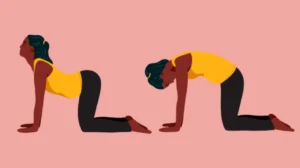
How to do:
Start on Your Hands and Knees
-
-
Place palms under shoulders.
-
Keep knees under hips.
-
Keep your spine neutral and comfortable.
-
Inhale – Drop Your Belly Down
-
Lift your chest slightly.
-
Arch your back gently.
-
Look forward or slightly upward.
(This is the “Cow” position.)
Exhale – Round Your Back
-
Pull your belly slightly inward.
-
Round your spine upward like a stretching cat.
- Let your head drop gently.
(This is the “Cat” position.)
Repeat the movement
- Continue inhaling into Cow Pose
- Exhaling into Cat Pose
- Do the movement slowly with your breath.
How Cow Pose Helps Reduce PCOD
Improves Blood Flow to Pelvic Organs
-
Gently stretches the abdomen
-
Increases circulation to ovaries and uterus
-
Supports healthier ovarian function
Improves Digestion & Metabolism
-
Better digestion supports insulin balance
-
Important because insulin resistance is common in PCOD
Helps with Menstrual Discomfort
-
Releases tension in the lower back and pelvis
-
Can ease cramps and stiffness
Benefits:
-
Improves blood circulation to ovaries
-
Reduces belly fat (common in PCOD)
-
Balances hormones
-
Helps regulate menstrual cycle
-
Reduces stress and anxiety
-
Improves digestion and metabolism
(3).Bhujangasana (Cobra Pose)

Lie on your stomach
-
Legs straight, feet together
-
Forehead resting on the floor
Place your hands
-
Palms under shoulders
-
Elbows close to your body
Inhale and lift
-
Slowly lift your head and chest
-
Use back muscles first, hands for support
Hold the pose
-
Keep shoulders relaxed
-
Look straight or slightly up
-
Breathe normally
Exhale and release
-
Slowly lower chest and head
-
Relax on the floor
Duration:
-
Hold for 10–20 seconds
-
Repeat 2–3 times
Breathing:
-
Inhale while lifting
-
Exhale while coming down
-
Keep breathing slow and relaxed
How Bhujangasana Helps Reduce PCOD
Stimulates Ovaries & Uterus
-
Gently stretches the lower abdomen
-
Improves blood circulation to reproductive organs
-
Supports healthier ovarian function
Helps Balance Hormones
-
Activates endocrine glands
-
Supports better hormone regulation over time
Reduces Stress
-
Opens the chest and improves breathing
-
Calms the nervous system
-
Lower stress helps control PCOD symptoms
Improves Digestion & Metabolism
-
Massages abdominal organs
-
Helps with digestion and insulin balance
(important for PCOD)
Eases Menstrual Discomfort
-
Relieves stiffness in lower back
-
Can help reduce cramps and fatigue
there is other yoga for new benefit: